Published: July 2, 2026, 08:14 PM
Shah Rukh Khan’s Knight Riders Group has opened a purpose-built international cricket stadium in Los Angeles, marking a historic milestone for Major League Cricket and the sport’s growing footprint in the United States.
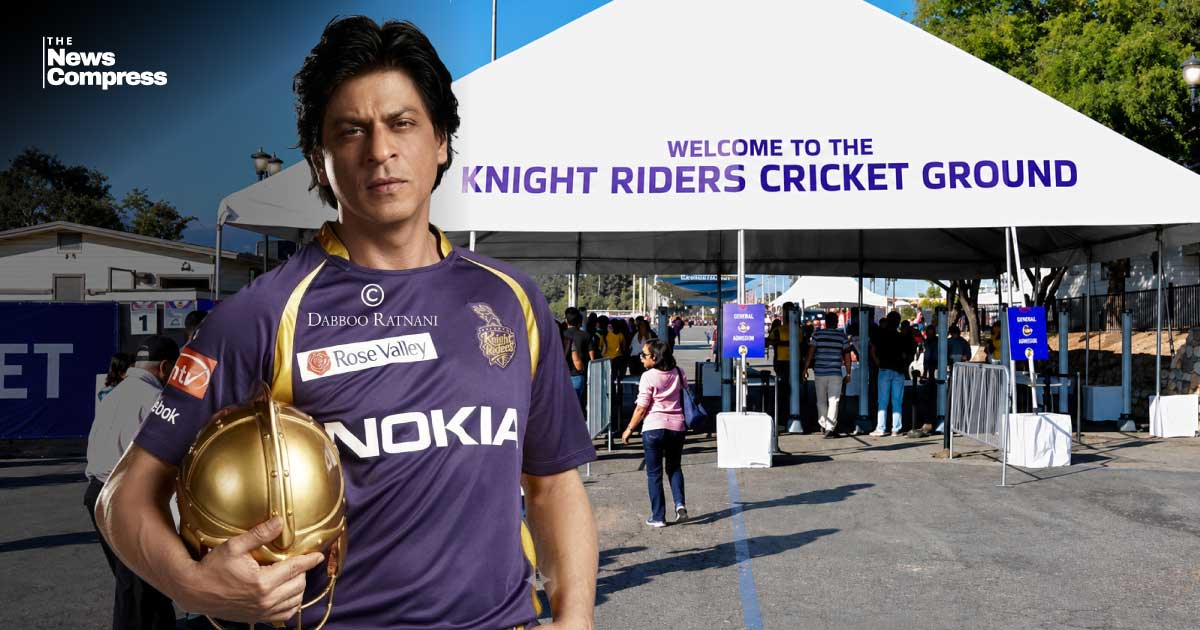
Shah Rukh Khan`s Knight Riders Group has made cricket history by becoming the first global cricket franchise to build and operate an international cricket stadium outside its home market.
The landmark venue welcomed its first Major League Cricket (MLC) fixture as the Los Angeles Knight Riders (LAKR) took on Washington Freedom, signaling a significant step in cricket`s growing presence in America.
More than just another sporting venue, the Knight Riders Cricket Ground is being positioned as a permanent home for cricket in Los Angeles and reflects the franchise`s long-term commitment to growing the game through investment in world-class infrastructure.
Built to international standards, the venue features eight wickets on the main square, ICC-compliant playing dimensions and six 120-foot floodlight towers. More than 32,000 metric tonnes of earth were moved during construction to create the purpose-built arena.
"What started as a dream has become a reality today," Shah Rukh Khan, co-owner of the Knight Riders Group, said in a statement.
"Bringing cricket, the second most-watched sport in the world, to Los Angeles is a landmark moment for all of us. Through this long-term partnership between Fairplex and Knight Riders, we are creating much more than a cricket venue. We are building a space that celebrates community, togetherness, energy and entertainment."
He added: "It is a place built not just for sport, but also for entertainment, for families and for memories that will last forever. We hope this becomes a home for cricket in Los Angeles and inspires generations of fans and players alike. This is for Los Angeles, for cricket fans across the globe and for the Knight Riders family. Believe in Purple and Gold."
Venky Mysore, CEO of Knight Riders Sports, described the project as a defining moment for the franchise`s global ambitions.
"The Knight Riders Cricket Ground, LA is much more than a stadium; it is a statement of intent for the future of cricket," he said.
"Becoming the first global cricket brand to establish an international cricket stadium is a proud milestone for the Knight Riders Group and reflects our belief that the growth of the game must be supported by world-class infrastructure. We wanted to create a venue that players would love competing at, fans would cherish visiting, and the local community could proudly call its cricketing home."
Adding a touch of Hollywood sporting glamour to the occasion, former NBA champion Metta World Peace—formerly known as Ron Artest—will bowl the ceremonial first ball at the inaugural MLC match. The former Los Angeles Lakers star`s involvement highlights the growing crossover between cricket and mainstream American sports as the game continues to build momentum in the US.
The Knight Riders Cricket Ground will host Major League Cricket matches from July 1 to July 5, bringing elite T20 action to Los Angeles and strengthening cricket`s rapidly expanding footprint in the United States.
About the Knight Riders
The Knight Riders Group has evolved into one of the biggest brands in franchise cricket, with four professional teams across three continents and nine major titles.
Its portfolio includes the Kolkata Knight Riders (Indian Premier League), Trinbago Knight Riders (Caribbean Premier League), Abu Dhabi Knight Riders (International League T20) and Los Angeles Knight Riders (Major League Cricket).
Kolkata Knight Riders are three-time IPL champions, having lifted the trophy in 2012, 2014 and 2024, while also finishing runners-up in 2021. Trinbago Knight Riders are the Caribbean Premier League`s most successful men`s side with five titles, including an unbeaten championship-winning campaign in 2020. The franchise`s women`s team also claimed the inaugural Women`s Caribbean Premier League title in 2022.
Beyond franchise cricket, the Knight Riders Academy continues to identify and develop emerging talent from India and around the world, focusing on year-round training, skill development and player fitness.