Published: April 2, 2026, 12:58 AM
Christina Koch’s journey from determined student to record-breaking astronaut now leads her to the Moon, where she will make history as part of Artemis II—marking a new era of diverse space exploration and inspiring future generations worldwide.
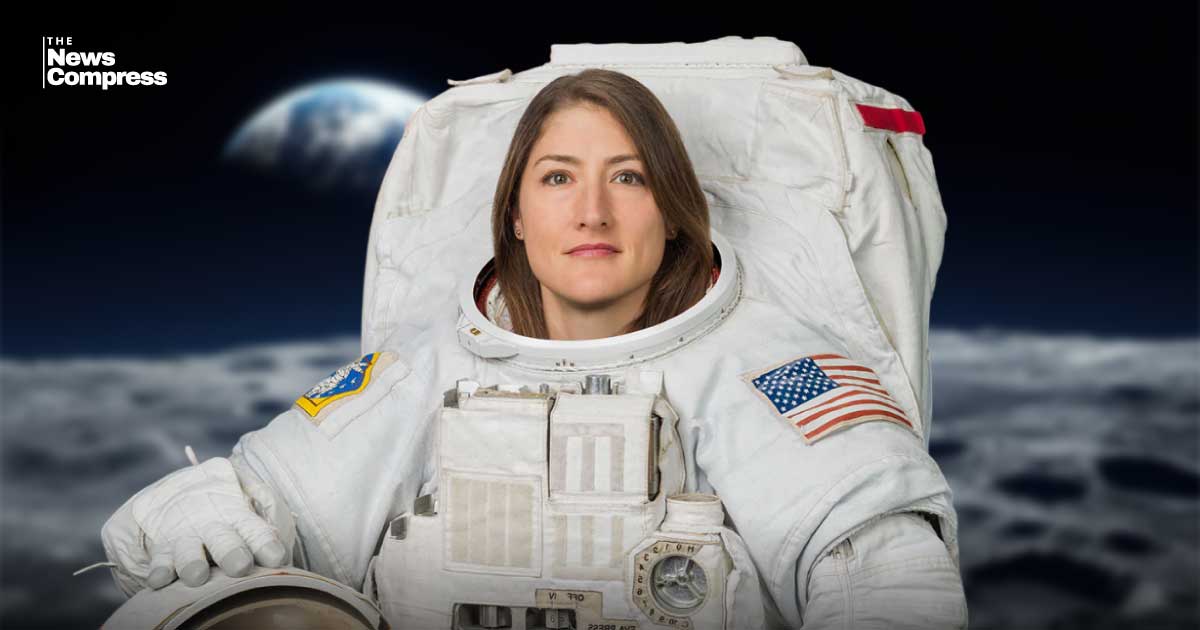
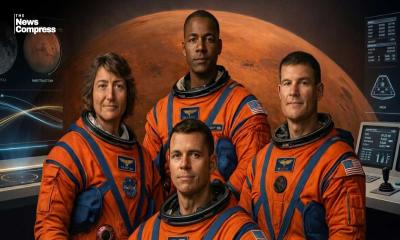
The story of Christina Koch’s journey from childhood dreams of being an astronaut to floating outside the International Space Station sounds like a classic tale of the modern age. And soon, she will add lunar voyager to her long list of achievements. From her early years in western Michigan to her upbringing as a young adult and college student in North Carolina, and then a career in research and engineering, Koch built a solid foundation of achievements to qualify her for the role of mission specialist on the first human mission to reach the Moon since 1972. Koch and two of her Artemis II crewmates, Victor Glover and Jeremy Hansen, will also set individual milestones as they become the first woman, Black man, and Canadian, respectively, to reach such a distance from Earth and peer back at it from beyond the Moon. This new generation of space explorers, led by Navy Capt. Reid Wiseman, will offer new perspectives on human spaceflight’s ability to reframe the existence of Earth hanging in the darkness of space.
Koch is no stranger to record setting or working in some of the most unimaginable places on and off the Earth. Her collegiate career was marked by earning two bachelor’s degrees (electrical engineering and physics) and a master’s degree (electrical engineering) at North Carolina State University. Perhaps an early indicator of her predilection for spaceflight, Koch’s first two degrees were partially funded by awards from the Astronaut Scholarship Foundation. Like many of her fellow astronauts, she began her engineering career working for NASA, at the Goddard Space Flight Center just outside Washington, DC. She set her sights quickly, though, on a very dramatic new research location: the Antarctic. For over three years, Koch worked in some of the most remote research stations on that continent, gaining a sense of just what space might do to machines she might travel in one day. Isolation, brutal environmental conditions, distance from family, and limited supplies contributed to her pre-NASA experience of ISS-like conditions. Koch also worked in space research at both NASA and NOAA (the National Oceanographic and Atmospheric Administration), helping develop instruments for space missions and working in remote stations across the globe on engineering research projects.
Koch’s sights were set on higher orbits though, and her professional research and experiences most certainly made her a standout candidate (amongst many standouts of course) for the 2013 group of astronauts selected by NASA. The set of eight individuals included her Artemis II crewmate Victor Glover, and ISS crewmates Anne McClain, Nick Hague, Andrew Morgan, and Jessica Meir. After two years of candidate training, which included learning to fly T-38 jets that astronauts use as trainers and for quick transportation to work locations, Koch and the other seven of Group 21 entered regular astronaut rotation and became eligible for assignment. Since it would still be a few more years until SpaceX’s crew Dragon spacecraft would be ready, Koch and her cohort would train partially in Russia to fly on the Soyuz spacecraft to low Earth orbit.
Her long-imagined trip to space finally happened in March 2018, when she and Soyuz MS-12 crewmates Aleksey Ovchinin and Nick Hague launched from the Roscosmos Baikonur Cosmodrome launch facility to the International Space Station. As a member of Expeditions 58, 59, and 60, through to her landing back on Earth in February 2020, Koch spent a record-setting 328 days in orbit and surpassed Peggy Whitson as the woman with the most consecutive days in space. That would be one of two records set by women during this period of ISS life. Early in her time on the station, the first planned extra-vehicular activity (EVA, or spacewalk) by two women (Koch and Anne McClain) required cancellation due to spacesuit technical issues. Thankfully, a second spacewalk was scheduled with Koch and Jessica Meir and put the two in the record books. The two women worked for over seven hours outside the ISS upgrading power systems. Reaching space after a lifetime of dreaming must be incredibly satisfying and recognition of the commitment and hard work it requires. Koch spent months in orbit performing scientific and technical experiments, all the while participating in ongoing biological research on the effects of microgravity on the human body. Like astronauts for most of the past 60 years of human spaceflight, Koch regularly collected samples of her own body fluids for later study on Earth. The frozen samples become part of a life-long tracking effort to catalogue the health of all astronauts to understand how everything from DNA to our largest bodily systems change due to leaving the surface of Earth; some of these changes might be temporary or long-lasting. The studies include ultrasounds of the eyes, monitoring of muscle mass and exertion during exercise, and how elevated exposure to solar and cosmic radiation may influence a person’s health over time. Yearly physicals, even after retirement from active astronaut status, ensure continuity of care for conditions that might crop up later. The hope is that doctors may, working with engineers, find ways to create protective equipment or develop preventative measures to decrease negative effects of microgravity.
And while astronauts have previously travelled to the Moon, as Koch and the Artemis II crew will soon do, none of the Apollo astronauts lived for months in low Earth orbit before those trips, which three of the four members of this crew have already done. How might leaving the magnetic fields and Van Allen belts be different for Koch, the only woman on this flight? While no evidence seems to suggest any immediate or short-term health effects, the medical studies stemming from Artemis II research are expected to impact later Artemis mission planning and any possibility of humans going to Mars. The future participation of women in spaceflights beyond Earth orbit may hinge on what can be learned from the first woman to go there, Christina Koch. She goes to the Moon carrying with her a lifetime of dreams of floating in a spacecraft, and the dreams of perhaps thousands of young girls watching from their homes, hoping to follow in her footsteps. Undoubtedly, women around the world will watch with admiration as she circles the Moon and shares her unique perspective of a sunlit Earth rising from behind that silvery orb in our sky.