
Published: March 16, 2026, 11:37 PM
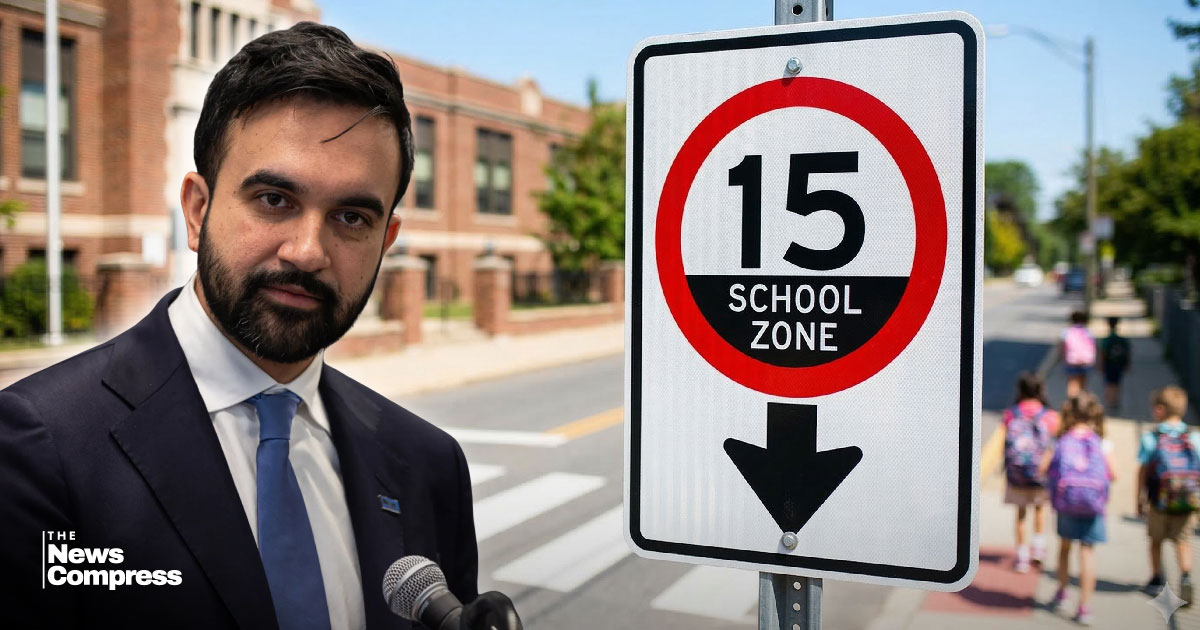
Hundreds of New York City schools will soon see reduced speed limits on their surrounding streets, Mayor Zohran Mamdani announced Monday.
The change marks an escalation in the city’s enforcement of Sammy’s Law, state legislation meant to curb dangerous driving.
The city will lower speeds to 15 mph outside more than 800 schools by the end of the year, with plans to expand the initiative to all eligible school locations citywide by the end of Mamdani’s first term, he said. Most of the schools in the initiative currently have speed limits of 20 mph. Another 500 campuses already have 15 mph limits, while many of the rest of the roughly 2,300 school locations across the city currently cap speeds at 25 mph.
Officials plan to bring the 15 mph limit to all eligible schools by the end of Mamdani’s first term, he said. A pedestrian struck by a car traveling 25 miles per hour is three times more likely to be seriously injured than if they’re hit by a car going 15, officials said.
A 2022 investigation by Streetsblog found that streets surrounding schools see a far higher rate of crashes and injuries than other city roadways during school dropoff and pickup times. The problem is especially pronounced outside schools with higher proportions of students of color, the analysis found.
The city is prioritizing schools for the slow zones based on traffic data and other street safety plans in the works, officials said.
Sammy’s Law — named for 12-year-old Sammy Cohen Eckstein, who died after being struck by a van when he chased a soccer ball into the street on Brooklyn’s Prospect Park West in 2013 — was signed by Gov. Kathy Hochul in 2024. It gives the city Transportation Department authority to reduce speed limits on certain streets without the approval of the City Council, which controls the citywide default speed limit.
At each of the new school slow zones, officials will give local community boards 60 days to comment on the change before it takes effect.
Under former Mayor Eric Adams, the city moved to lower maximum speeds from 25 to 20 mph on 250 designated “neighborhood slow zones” across the city — generally smaller, residential streets.
The law also gives the city the authority to reduce speed limits around parks and senior centers. The reduced speed zones are expected to be marked with signs and can be fit with “traffic-calming” measures like speed bumps.
In neighborhoods where speeds were reduced to 20 miles per hour, vehicle crashes dropped by 14% and car-related injuries by 31%, according to the Transportation Department.
“Lower speeds save lives,” Mamdani said in a statement, “and we will use every tool at our disposal to protect our neighbors as they move about our city.”