
Published: May 29, 2025, 05:26 PM
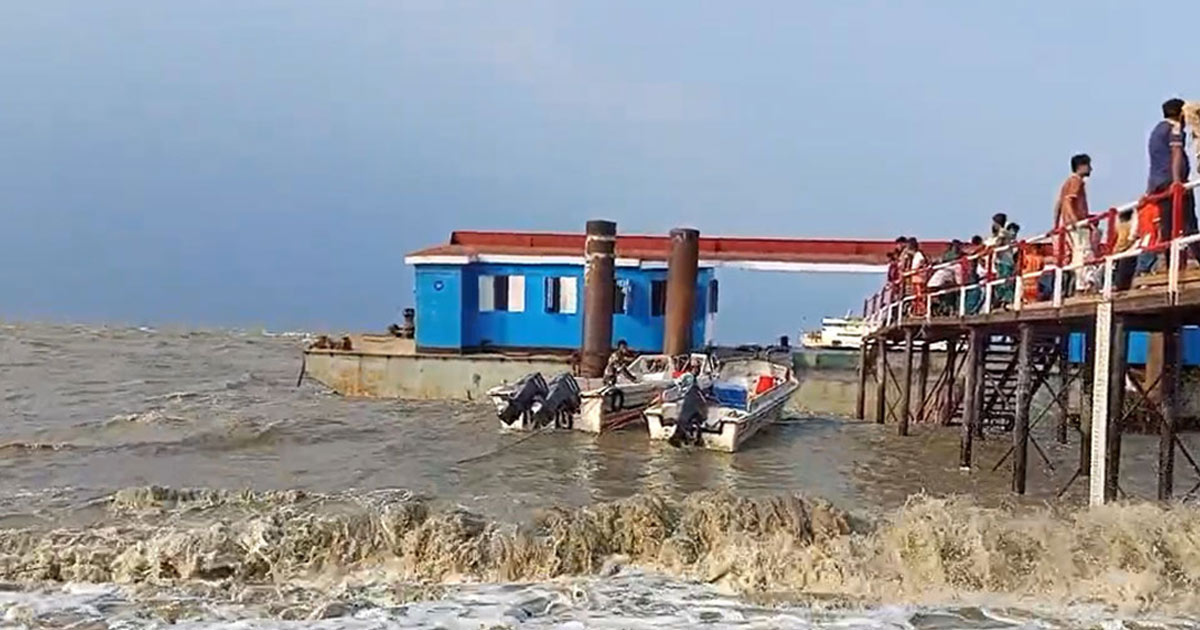
image: Bdnews24
The coastal upazila of Hatia in Noakhali has become virtually cut off from the rest of Bangladesh as heavy rainfall and rough seas, triggered by a depression over the Bay of Bengal, continue to batter the region. The local administration has suspended all river transport since 11:30am on Wednesday to ensure public safety, leaving thousands stranded. Meanwhile, the low-lying island of Nijhum Dwip is submerged under tidal water, with residents marooned and essential infrastructure affected.
According to Humayun Kabir from the Noakhali office of the Bangladesh Meteorological Department, 67mm of rainfall was recorded in the last 24 hours. The depression over the northwest Bay has intensified and may continue to strengthen. The Bangladesh Meteorological Department has issued local cautionary signal No. 3 for maritime ports, and all fishing boats and trawlers have been advised to remain in safe shelters.
Nijhum Dwip, already vulnerable due to the absence of a protective embankment, has seen tidal surges 5-6 feet higher than normal. Many households, particularly in areas like Namarbazar and Shatophul Bandar, are flooded. Shops along the riverbanks and jetty areas have been damaged or swept away by the rising water from the Meghna River. Locals are facing immense hardship with no immediate relief in sight.
Residents in both Hatia and Nijhum Dwip report being stuck indoors due to continuous rain, strong gusts, and squalls. “It’s been pouring non-stop since Wednesday,” said Saiful Islam of Burirchar Union. “Many areas are underwater, and daily life has come to a standstill.”
The authorities are taking emergency measures. Hatia Upazila Executive Officer Md Alauddin confirmed that all water transport has been halted until conditions improve. Deputy Commissioner Khandkar Estiaque Ahmed added that safe shelters have been prepared to relocate people from high-risk zones, and cyclone shelters are also ready. The Water Development Board has been directed to monitor vulnerable embankments in Hatia, Subarnachar, and Companiganj.
Locals are increasingly concerned about damage to crops, especially vegetables, if the water does not recede soon. With communication cut off, flooded homes, and livelihoods on pause, the situation in Hatia and Nijhum Dwip remains critical.